Sunday, January 31, 2010
Swimsuit season already?
Who says you can't have 14 children, no real job, and still have it all?! The Octomom is doing it her way!


Saturday, January 30, 2010
Keeping Up with the Quack Trim
For all you disciples of reality television, apparently the Kardashian girls are endorsing some new diet pill, called “Quick Trim.”
This pill contains phentermine, an appetite suppressant. As with all diet pills, this product is of course not free of side effects. Some of the common ones include: constipation; diarrhea; insomnia; dizziness; dry or distorted tastes in the mouth; exaggerated sense of well being; headaches; nervousness; restlessness; upset stomach; decreased libido; allergic reactions; chest pains; irregular heartbeat. The list can go on and on for quite some time.
I don’t know about you, but 'keeping up with the Kardashians' sounds like far too much effort.
This pill contains phentermine, an appetite suppressant. As with all diet pills, this product is of course not free of side effects. Some of the common ones include: constipation; diarrhea; insomnia; dizziness; dry or distorted tastes in the mouth; exaggerated sense of well being; headaches; nervousness; restlessness; upset stomach; decreased libido; allergic reactions; chest pains; irregular heartbeat. The list can go on and on for quite some time.
I don’t know about you, but 'keeping up with the Kardashians' sounds like far too much effort.
Hormone Replacement Therapy for Guys

Are testosterone and growth hormone the fountain of youth for aging men? “I consider what I do aggressive prevention, the basis of which is metabolism modulation,” Dr. Florence Comite says. “Twenty years from now, this will be the standard of care.” But "standard of care" to some means "quackery" to others. "If anyone is arguing that this is the new medical profession or the way things are going to be done 20 years from now, I would say they’re drinking the Kool-Aid of the antiaging industry,” says Dr. Jay Olshansky. “They’re making money selling a repackaged version of traditional preventive medicine, and then they add some hormones and supplements. It’s just such a racket.” There's more in The New York Times Magazine.
Book Reviews 2.0

“At age 36, I found myself in a medium-security prison serving 3-5 years for destruction of government property and public intoxication. This was stiff punishment for drunkenly defecating in a mailbox, but as the judge pointed out, this was my third conviction for the exact same crime.”
So begins an Amazon review of The Secret which 8,581 of 8,905 Amazon readers found “helpful.” What exactly is the key to getting your review chosen as "helpful"? "The product review, as a literary form, is in its heyday," writes Virginia Heffernan. "Polemical, evocative, witty, narrative, exhortative, furious, ironic, off the cuff: the reviews on Amazon use all the tools in the critic’s cubby — and invent some of their own. The ones that rise to the top, in the site’s parallel 'favorable' and 'critical' categories, adroitly win your trust and close their cases."
Corrupt marketing practices at Lilly and AstraZeneca

"Drug marketing is a very sophisticated system which corrupts every part of the scientific and medical network," says Australian psychiatrist Peter Parry. A new study in the Journal of Bioethical Inquiry by Parry and Metropolitan State University (Minnesota) psychology professor Glen Spielmans suggests the extent to which antipsychotic drugmakers have manipulated and distorted medical evidence about their drugs.

Friday, January 29, 2010

Thursday, January 28, 2010
LA cuts back on marijuana, but not Botox

The Los Angeles city council has passed an ordinance that caps the number of marijuana dispensaries at 70, says the WSJ Health Blog. (No word yet on Botox dispensaries.)
Tuesday, January 26, 2010
Life Elixir, Coming to a Costco Near You
Over the holiday break, my dad and I went to the Costco in my hometown. In the food section, they had several tables set up with free food and drink samples. One of the tables had a large crowd of older adults standing around, so obviously we had to see what the commotion was about. The free sample was for this drink called Reversitall, which is basically a non-alcoholic red wine. I’m sure you have heard about the health benefits of red wine, and perhaps even about the “French Paradox” and “resveratrol”. Basically, this $20+/bottle drink makes the claim that it reverses the aging process by providing enough antioxidants that your “inner machinery” won’t rust. Supposedly one "shot" of this drink gives you the same amount of resveratrol as a bottle of red wine, meaning you can successfully avoid getting busted for DUI.
An amusing exchange:
Woman at the Counter: Come try Reversitall and feel years younger! Only a 1 oz shot each day is needed! Life elixir everyone!
Dad: So what you’re saying is that if I drop $20 for this I will magically be 30 again?
Woman: You might even live to be 150! Resveratrol can do wonders!
Dad: And a shot each day is all that is needed?
Woman: Yes, a shot each day. Take it in a shot glass.
Dad: Ok, let’s give this a try.
(We both take a sample of this. It tastes pretty much like cough syrup.)
Woman: So, what do you two think?
Dad: Thanks, but we’re going to get some grapes. A few bushels of grapes. They’re cheaper and much tastier.
Woman: You just lost your chance to be 150 someday.
Hah! Meanwhile, all the other folks at the sample table who tried Reversitall ended up being $20 poorer than they were had they not visited this booth. Some people even purchased 2-3 bottles of this at once!
Do you think that this "life elixir" is a legitimate anti-aging treatment? Or do you think that the nutritional supplement industry is capitalizing on the general public's fear of old age / death?
IRINE?
Daniel Carlat has an eye-opening blog post about Dr. Lawrence DuBuske (who resigned from Harvard rather than give up his pharma talks) and his non-profit Immunology Research Institute of New England (IRINE).
You are not the story
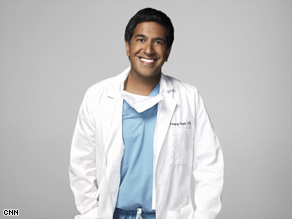
Should TV doctors report on themselves? The glut of doctor-reporters in Haiti has prompted a backlash. On the Media reports.
"Dear, when you're out today at the beach will you make sure to pick up some marijuana, oh, and some Botox? Thanks..."
 At this fine establishment on Venice Beach (CA), you can meet with a doctor (no appointment necessary) to receive medical-grade marijuana and/or Botox. This is what they claim in a brochure:
Botox
"For the temporary removal of facial wrinkles. Botox injections have been shown to eliminate frown lines, crows feet, forehead wrinkles and some upper lip lines. FDA-approved for the treatment of excessive underarm sweating (Hyperhidrosis).
- Facial treatment: $10/unit
- Underarm sweating treatment: $10/unit"
(Photo courtesy of M. Wolston)
Stop whining about pharma money, says Times science writer

John Tierney of the New York Times thinks that corporate critics should get used to the fact that industry money funds science. Meanwhile, a former top researcher for Astra Zeneca told the BBC that the company pressured him to approve false marketing materials for its antipsychotic drug, Seroquel.
Monday, January 25, 2010
Soul on Ice

Jill Lepore has written an excellent (and very funny) profile of Robert Ettinger, a founder of the cryonics movement and still alive at age 91, in the January 25 issue of The New Yorker. (For the full article you'll need to buy the magazine, or else rely on bootleg scans.)

Birth control is the new tupperware

Bayer Pharmaceuticals is selling IUDs at house parties sponsored by the Mommy-marketing site Mom Central. The FDA is not happy. Read the FDA warning letter here.
The hidden dangers of radiation therapy
"As Scott Jerome-Parks lay dying, he clung to this wish: that his fatal radiation overdose — which left him deaf, struggling to see, unable to swallow, burned, with his teeth falling out, with ulcers in his mouth and throat, nauseated, in severe pain and finally unable to breathe — be studied and talked about publicly so that others might not have to live his nightmare."
Read more about radiation therapy errors in The New York Times.
"The Times found that while this new technology allows doctors to more accurately attack tumors and reduce certain mistakes, its complexity has created new avenues for error — through software flaws, faulty programming, poor safety procedures or inadequate staffing and training. When those errors occur, they can be crippling."
Read more about radiation therapy errors in The New York Times.
"The Times found that while this new technology allows doctors to more accurately attack tumors and reduce certain mistakes, its complexity has created new avenues for error — through software flaws, faulty programming, poor safety procedures or inadequate staffing and training. When those errors occur, they can be crippling."
Sunday, January 24, 2010
Genzyme goes to Hollywood?
Extraordinary Measures, the new Harrison Ford film, was based on a true story involving the Genzyme Corporation. What do the folks at Genzyme think?
Saturday, January 23, 2010
Doc quits the Brigham

’’There are physicians earning so much money [from drug makers] that they would give up their jobs,’’ said Dr. Steven Nissen, head of cardiovascular medicine at the Cleveland Clinic Foundation. “It’s a shocking story. Normally you’d give up the [pharmaceutical company] honoraria.’’ Read more in the Boston Globe about the Harvard physician who is resigning his post rather than give up his pharmaceutical industry speaking gig.
Yet another diet drug scare

Remember Fen-Phen? European regulators pulling the Abbott diet drug Meridia from the market. The FDA is not going as far, but it is warning patients with heart disease against taking the drug. Read more in the NY Times and the WSJ Health Blog.
Tuesday, January 19, 2010
The Johnson & Johnson PR Blunder
Public relations textbooks cite the way Johnson & Johnson handled the Tylenol poisoning scare of 1982 as an ideal way to handle bad publicity. So why is Johnson & Johnson managing its current drug problems so badly? Natasha Singer reports in the New York Times.
Wednesday, July 29, 2009
University of Minnesota is in ethics trouble again
"In May 2006, University of Minnesota spine surgeon David Polly urged a Senate committee to fund research into the severe arm, leg and spine injuries suffered by soldiers in Iraq and elsewhere.
Dr. Polly told the committee he was testifying on behalf of the American Academy of Orthopaedic Surgeons and referenced his prior work caring for soldiers as a surgeon at the Walter Reed Army Medical Center.
What Dr. Polly didn't disclose during his testimony was that his trip to Washington was paid for by Medtronic Inc., the big medical-device maker whose bone growth product, called Infuse, has been used to treat soldiers, according to company records.
Dr. Polly and colleagues in Minnesota subsequently received a $466,644 Department of Defense grant for a two-year study beginning in February 2007 to evaluate Infuse in cases where an injury is also infected, according to the university.
Dr. Polly was paid $1.14 million by Medtronic for consulting services from 2004 to 2007.
Details of Dr. Polly's consultant billing were provided by Medtronic to Sen. Charles Grassley, an Iowa Republican who has been scrutinizing the relationship between academics and industry."
Read more in The Wall Street Journal. See also this article in the Minneapolis Star Tribune.
Tuesday, June 09, 2009
When drug trials go terribly wrong
Christopher Lane of Northwestern University, the author of Shyness: How Normal Behavior Became a Sickness, blogs for Psychology Today about the death of Dan Markingson in a University of Minnesota drug trial.
Saturday, June 06, 2009
Dr. Whistleblower
"Dr. Romney C. Andersen, a Walter Reed Army Medical Center surgeon, was surprised last summer when his neighbor, a fellow doctor, congratulated him on a new medical journal study bearing his name.
What study?” Dr. Andersen asked. Soon, he was not the only person asking questions. Army officials, alerted by Dr. Andersen, began an investigation. They uncovered an apparent case of falsified research by a doctor who had befriended Dr. Andersen when they both worked at Walter Reed, treating American soldiers severely injured in Iraq."
Read more in the New York Times.
What study?” Dr. Andersen asked. Soon, he was not the only person asking questions. Army officials, alerted by Dr. Andersen, began an investigation. They uncovered an apparent case of falsified research by a doctor who had befriended Dr. Andersen when they both worked at Walter Reed, treating American soldiers severely injured in Iraq."
Read more in the New York Times.
Thursday, June 04, 2009
Give Blood Pressure Drugs to All
Blood-pressure-lowering drugs should be offered to everyone, regardless of their blood pressure level, as a safeguard against coronary heart disease and stroke, researchers who conducted a meta-analysis of 147 randomized trials (comprising 958,000 people) conclude in the May 19 issue of BMJ.
“Guidelines on the use of blood-pressure-lowering drugs can be simplified so that drugs are offered to people with all levels of blood pressure,” write Drs Malcolm R Law and Nicholas Wald (Wolfson Institute of Preventive Medicine, Barts and the London School of Medicine, Queen Mary University of London, UK). “Our results indicate the importance of lowering blood pressure in everyone over a certain age, rather than measuring it in everyone and treating it in some.”
“Whatever your blood pressure, you benefit from lowering it further,” Law told heartwire . “Everyone benefits from taking blood-pressure-lowering drugs. There is no one who does not benefit because their blood pressure is so-called normal.”
Six years ago, Law and Wald advocated the use of a polypill--containing a statin, three blood-pressure-lowering drugs (each at half the standard dose), folic acid, and aspirin--which they maintained could prevent heart attacks and stroke if taken by everyone 55 years and older and by everyone with existing cardiovascular disease.
*Free registration to view entire article
Tuesday, June 02, 2009
Opening up the FDA?
The FDA may see some changes soon, says the New York Times. "The goal is to open up a system in which the agency failed to inform the public that a widely prescribed heartburn drug was especially toxic to babies; that a diabetes medicine and a painkiller increased heart attack risks; and that antidepressants increased suicidal thoughts and behavior in children and teenagers."
Friday, May 29, 2009

Monday, May 25, 2009
webcast your brain surgery
The rising popularity of Twittering and webcasting live from the operating room. Hospitals use it as a marketing tool...includes a quote from Jeffrey Kahn.
Saturday, May 23, 2009

"Corinne insisted, I have no moral compass. The most damning illustration has to do with her (now former) job as a pharmaceutical sales rep, where she said she knowingly sold drugs to physicicans that she knew would kill people. 'Selling drugs is a lie. I sold drugs that I knew damn well—I sold Vioxx for Merck before it got taken off the market for killing people. I knew damn well it was dangerous; I went around telling them to write it. There’s a lot of serious lying I’ve done in my life,' she said. That’s okay, Corinne told me, because 'I’m doing a job. For me, in that case, Merck told me to go out and sell drug even though I had hesitation about it. It’s not for me to say.'"
Read more about this drug rep/Survivor-contestant here.
The dangers of new drugs
A Cornell psychiatrist explains how his residents ignore proven drugs in favor of the cool new ones, in the New York Times.
Friday, May 22, 2009
Monday, May 18, 2009
Pharma CEO paychecks

Which pharma CEOs are paid the most? The list is topped by Bill Weldon at Johnson and Johnson, who was paid $29.4 million last year. Next in line were the CEOs of Abbott, Wyeth and Bristol-Myers Squibb. Fierce Pharma reports.
Sunday, May 17, 2009
The politics of desperation
"A Virginia family’s campaign for access to an unproven drug highlights the challenges many terminally ill patients face in the search for treatment." Read more in the NY Times.
Saturday, May 16, 2009
Thursday, May 14, 2009
NIH says maybe, maybe not
"The National Institutes of Health, after months of pressure, announced last week that it would consider imposing tougher regulations aimed at reducing financial conflicts of interest in scientific research. But it might actually not do anything."
Read more in The Chronicle of Higher Education.
Read more in The Chronicle of Higher Education.
Google wants to know if you're sick
"Google is attempting to find out how much of a role Internet searches play in the self-diagnosis process". Here.
Wednesday, May 13, 2009
Medtronic, the Defense Department and the University of Minnesota
The Center for Public Integrity reports.
Tuesday, May 12, 2009
Slate founder says: ban lawsuits against the device industry
Michael Kinsley warned Congress that "lawsuits would prevent patients from getting access to devices. Identifying himself as a grateful customer of the pharmaceutical industry, he said he had had Parkinsons 15 years. He noted that he was testifying at the request of Medtronic, which approached him last week, though he wasn’t paid by them." The WSJ Health Blog reports.
The future of medicine?

"I am not your typical doctor. I'm easily accessible and mobile," Dr. Jay tells us via his website. That's right: for a yearly enrollment fee, you can IM Dr. Jay about your symptoms anytime. He also makes house calls—or, you know, wherever calls! "We can figure out if I need to come to your work, your home, or meet somewhere else in the city. We can even meet in the park or a coffee shop depending on the problem. Wherever you feel comfortable."
Gawker comments. See Dr. Jay's strange website here.
Monday, May 11, 2009
Saturday, May 09, 2009
Grassley vs Wagner
An influential U.S. senator has told a federal investigator that a University of Texas System researcher may not have properly disclosed her financial relationship with a drug company.
The inspector general at the U.S. Department of Health and Human Services could launch an inquiry into the scientist, UT child pharmacology researcher Karen Wagner.
The Dallas Morning News reports.
Thursday, May 07, 2009
Legislature approves bill limiting mentally ill patients' participation in drug trials
A bill before Gov. Tim Pawlenty would restrict the ability of clinical drug researchers to enroll mentally ill patients who are under court commitment orders.
The House and Senate both voted unanimously this week in favor of the bill, which was motivated by the suicide of schizophrenic Dan Markingson. Friday marks five years since his death in a group home in West St. Paul.
At the time, Markingson was enrolled in a comparative drug trial at the University of Minnesota — despite objections from his mother that he was coerced into the trial and should be withdrawn.
Read more in the Pioneer Press.
Synthes settles
"The New Jersey attorney general has announced a settlement with a medical device maker accused of failing to disclose financial conflicts of interest among doctors researching its products, and says her office is investigating other similar conflicts in the device industry," says the New York Times. Read more here.
Monday, May 04, 2009
Thought leader repents
Dr. James Stein of the University of Wisconsin, a former industry thought leader, talks about his change of heart in this video.
More About the Mighty Potato
Potatos are hot, hot, hot! And the creator of the "classic American potato," Luther Burbank, is featured not only in the novel we are reading for class, Ruth Ozeki's All Over Creation, but also in a new book reviewed Sunday in the New York Times.
Jane S. Smith has written a biography of Burbank, titled The Garden of Invention: Luther Burbank and the Business of Breeding Plants.
According to the review, Smith writes that the type of russet potato Burbank developed became so popular that McDonald's insisted on its use for the making of its French fries. "Then, in 1995, the Monsanto Corporation would genetically modify the russet Burbank so that the potato could produce its own pesticide to repel the Colorado potato beetle."
And did you know that 2008 was declared the "International Year of the Potato" by the United Nations? Nope, neither did I. That lucky spud.
Jane S. Smith has written a biography of Burbank, titled The Garden of Invention: Luther Burbank and the Business of Breeding Plants.
According to the review, Smith writes that the type of russet potato Burbank developed became so popular that McDonald's insisted on its use for the making of its French fries. "Then, in 1995, the Monsanto Corporation would genetically modify the russet Burbank so that the potato could produce its own pesticide to repel the Colorado potato beetle."
And did you know that 2008 was declared the "International Year of the Potato" by the United Nations? Nope, neither did I. That lucky spud.
Sunday, May 03, 2009
Merck published fake journal
The Scientist: NewsBlog:
Merck published fake journal
Posted by Bob Grant
[Entry posted at 30th April 2009 04:27 PM GMT]
Merck paid an undisclosed sum to Elsevier to produce several volumes of a publication that had the look of a peer-reviewed medical journal, but contained only reprinted or summarized articles--most of which presented data favorable to Merck products--that appeared to act solely as marketing tools with no disclosure of company sponsorship. "I've seen no shortage of creativity emanating from the marketing departments of drug companies," Peter Lurie, deputy director of the public health research group at the consumer advocacy nonprofit Public Citizen, said, after reviewing two issues of the publication obtained by The Scientist. "But even for someone as jaded as me, this is a new wrinkle." The Australasian Journal of Bone and Joint Medicine, which was published by Exerpta Medica, a division of scientific publishing juggernaut Elsevier, is not indexed in the MEDLINE database, and has no website (not even a defunct one). The Scientist obtained two issues of the journal: Volume 2, Issues 1 and 2, both dated 2003. The issues contained little in the way of advertisements apart from ads for Fosamax, a Merck drug for osteoporosis, and Vioxx. (Click here and here to view PDFs of the two issues.) The claim that Merck had created a journal out of whole cloth to serve as a marketing tool was first reported by The Australian about three weeks ago. It came to light in the context of a civil suit filed by Graeme Peterson, who suffered a heart attack in 2003 while on Vioxx, against Merck and its Australian subsidiary, Merck, Sharp & Dohme Australia (MSDA). In testimony provided at the trial last week, which was obtained by The Scientist, George Jelinek, an Australian physician and long-time member of the World Association of Medical Editors, reviewed four issues of the journal that were published from 2003-2004. An "average reader" (presumably a doctor) could easily mistake the publication for a "genuine" peer reviewed medical journal, he said in his testimony. "Only close inspection of the journals, along with knowledge of medical journals and publishing conventions, enabled me to determine that the Journal was not, in fact, a peer reviewed medical journal, but instead a marketing publication for MSD[A]." He also stated that four of the 21 articles featured in the first issue he reviewed referred to Fosamax. In the second issue, nine of the 29 articles related to Vioxx, and another 12 to Fosamax. All of these articles presented positive conclusions regarding the MSDA drugs. "I can understand why a pharmaceutical company would collect a number of research papers with results favourable to their products and make these available to doctors," Jelinek said at the trial. "This is straightforward marketing." Jelinek also pointed out several "review" articles that only cited one or two references. He described one of these articles as "simply a summary of an already published article," and noted that they were authored by "B&J Editorial." "It appears that 'B&J' (presumably Bone and Joint) refers to the Journal, and B&J editorial presumably to the publishers or owners as there is no editor of the journal," Jelinek said in his testimony. "This is a subtle attribution, and many readers may not realise that the paper was written by the owners or publishers of the journal, presuming that is who would write under the heading of 'editorial'." Lurie, in examining two of the issues for The Scientist, agreed that one particularly strange element of the Australasian Journal of Bone and Joint Medicine is that it contains "review" articles that cite just one or two references. "I've never seen anything quite like this," he said. "Reviews are usually swimming in references." For example, one article on osteoporosis labeled above the title as a "meta-analysis" cites two references -- one itself a meta-analysis. "To the jaundiced eye, [the journal] might be detected for what it is: marketing," he said. "Many doctors would fail to identify that and might be influenced by what they read." Lurie noted that the Australasian Journal of Bone and Joint Medicine is akin to other publishing strategies employed by drug companies; paying for supplements to existing journals or publishing compilations of original research articles that tend to lack scientific rigor (so-called "throwaways"). "It's kissing cousin to two other tricks that the [drug] companies pull." In response to several questions about the publication posed by The Scientist, an MSDA spokesperson wrote in an email: "MSDA understood that Elsevier envisaged the complimentary publication would draw on the vast resources of Elsevier, publishers of many leading peer-reviewed journals including Lancet, Bone, Joint Bone Spine and others, to deliver novel and timely full text articles and abstracts to physicians." Many of the articles appearing in the Australasian Journal of Bone and Joint Medicine were in fact reprints or summaries of studies that originally appeared in other Elsevier journals. A spokesperson for Elsevier, however, told The Scientist, "I wish there was greater disclosure that it was a sponsored journal." Disclosure of Merck's funding of the journal was not mentioned anywhere in the copies of issues obtained by The Scientist. Elsevier acknowledged that Merck had sponsored the publication, but did not disclose the amount the drug company paid. In a statement emailed to The Scientist, Elsevier said that the company "does not today consider a compilation of reprinted articles a 'Journal'." "Elsevier acknowledges the concern that the journals in question didn't have the appropriate disclosures," the statement continued. "It is worth noting that project in question was produced 6 years ago and disclosure protocols have evolved since 2003. Elsevier's current disclosure policies meet the rigor and requirements of the current publishing environment." The Elsevier spokesperson said the company wasn't aware of how many copies of the Australasian Journal of Bone and Joint Medicine were produced or how the publication was distributed in Australia, but noted that "the common practice for sponsored journals is that doctors receive them complimentary." The spokesperson added that Elsevier had no plans to look further into the matter. One of the members of Australasian Journal of Bone and Joint Medicine's "Honorary Editorial Board," Peter Brooks, a rheumatologist in Australia, said he didn't recall who asked him to serve on the board, but noted that he was on Merck's Asian Pacific and international advisory boards from the mid 1990s until about 2004, as well as the advisory boards of other pharmaceutical companies, including Pfizer and Amgen. "You get involved in a whole bunch of things at this level," Brooks said, adding that he had put his name on "a few advertorials" for pharmaceutical companies about 10 years ago. As for the Australasian Journal of Bone and Joint Medicine, he said, "If it would have been put to me that [the journal] was just sort of a throwaway, then I would have said 'no'" to serving on its editorial board. He said he was never paid for his role, adding that he "didn't ever get [manuscripts] to review or anything like that," while on the board, because the journal did not accept original manuscripts for review. "Having looked at one issue, it actually had some marketing studies," Brooks said. "It also had papers that were excerpted from other peer-reviewed journals. I don't think it's fair to say it was totally a marketing journal." Editor's note (April 30): This story has been updated from a previous version. Related stories: [11th March 2008] [May 2006] |
FDA approves Drug for the Annoyingly Cheerful
The Onion News Network: FDA approves Drug for the Annoyingly Cheerful
Friday, May 01, 2009
Another pharma doc repents
The 1990s was a heady time for the pharmaceutical industry, which had just embarked on what would become known as the Statin Wars. And James Stein, an up-and-coming heart doctor, was ripe to be hooked as a drug company speaker.
Stein, now a professor at the University of Wisconsin School of Medicine and Public Health, was a 29-year-old cardiology fellow in Chicago in 1994 when his faculty mentor asked him to fill in for him at a drug company-funded lecture to a large group of doctors.
It would be his first taste of life as a drug company speaker and consultant.
Stein got first-class airfare to Dallas. A limousine took him to a luxury hotel for the talk.
He walked off the stage, and a doctor from the conference handed him an envelope containing a $500 check.
"I got a pat on the back and he said, 'There's more where that came from, son.' I had no idea what that meant, but I went home and paid off part of my student loans," Stein said in a presentation at UW this month.
Read more in the Journal Sentinel.
Thursday, April 30, 2009
A pharma celebration?
 "In what may be the biggest break that the Food and Drug Administration and the pharmaceutical industry have had in years, GOP Sen. Charles Grassley could step out of his leading role on the Senate Finance Committee to take the top Republican spot on the Judiciary Committee." Alicia Mundy reports.
Tuesday, April 28, 2009
IoM advises stopping pharma gifts to doctors
WASHINGTON — In a scolding report, the nation’s most influential medical advisory group said that doctors should stop taking much of the money, gifts and free drug samples that they routinely accept from drug and device companies. Read the New York Times story here.
Saturday, April 25, 2009
Stimulating Undergraduates ...
 Margaret Talbot reports on the off label use of neuroenhancing drugs by students in the latest issue of The New Yorker.
Friday, April 24, 2009
Database restored
The St. Paul Pioneer Press has restored its searchable database of pharmaceutical industry payments to Minnesota physicians. You can try it here.
Merck ghosts in Oz

"Merck had a cardiologist sign his name to a medical journal article it wrote claiming there was no evidence of any heart risk attached to its drug Vioxx, court documents allegedly show." More evidence of corporate wrongdoing emerges in litigation against Merck in Australia, The Australian reports.
Spend your dwindling cash supply on sleep meds

Anxious Americans are losing sleep over their finances. This makes them a perfect mark for the National Sleep Foundation. Read more here.
Thursday, April 23, 2009
Coast IRB folds
"Companies typically die slow, lingering deaths, the victims of changing technologies or tectonic shifts in global trade. But it is possible to kill a company really fast." The New York Times reports the demise of Coast IRB, the for-profit review board caught up in a federal sting operation.
Monday, April 20, 2009
Blogging for dollars
"Increasingly, companies are paying users of social networking sites like Facebook and Twitter to hype their brands online." On the Media reports.
Worst story ever for Times?
"The Health News Review gave a big "F" to this week's New York Times' coverage of the Dendreon press release claiming Provenge had proved successful in treating prostate cancer. The story "fails readers in every important way," the review said." Read more on Gooznews.
My doctor, my artist

"A thing of beauty is a joy, whether forever or for a day, and if a doctor-artist can turn you into one, that’s art to me. And if he can rescue a body from serious ruin and a soul from despair, God bless him; he’s as good as Michelangelo. Does he cater to the rich and charge too much? Check out all the drecky Picassos still selling for huge prices at auction. Do all those nose jobs look pretty much alike? Check out paintings in Chelsea galleries these days."
Read about “I Am Art: An Expression of the Visual & Artistic Process of Plastic Surgery,” a new gallery show curated by a plastic surgeon, in the New York Times.
Friday, April 17, 2009
The friendly fascism of posthumanism

Listen to Andrei Codrescu discuss his new book, The Posthuman Dada Guide.
Psychiatrists get the most pharma money in Vermont

Psychiatrists top the list of specialties receiving gifts and payments from the drug industry in Vermont, says a report from the state attorney general. Eli Lilly tops the list of industry donors. Read more in the WSJ Health Blog.
Thursday, April 16, 2009
It's time to pump it up ....

... then push up daisies?
A NY times article on the emerging, and potentially dangerous, underground silicone injection culture. 'Pump parties' are particularly popular in the transgender community. Injections are performed by untrained and unlicensed individuals with non-medical silicone which can be contaminated with foreign materials such as paraffin and motor oil, occasionally leading to sepsis or embolism. The cost per treatment can be as high as $1,000.
The future of medical care

David Healy delivers the 2009 Nordlander Lecture in Science and Public Policy at Cornell University, titled "The Future of Medical Care: Can Industrialized and Marketized Healthcare be Made Universally Available?" The video of the event can be found here.
Wednesday, April 15, 2009
Giving away the store
"A new plan to give away trade secrets could improve big pharma’s awful reputation,"writes Jim Giles in The Prospect. And the plan is being proposed by the new CEO of GlaxoSmithKline. Read more here.
Tuesday, April 14, 2009
Coast IRB agrees to stop reviewing studies
Coast IRB, the for-profit IRB that was stung by a federal undercover operation, has agreed to stop reviewing FDA-regulated studies. Read more here.
Let's Test Every Pregnant Woman's Thyroid Level ...
 The female equivalent of PSA testing?
If hypothyroidism, hyperthyroidism, pre-eclampsia, and miscarriage don't grab your attention, how about children with subpar IQ levels?
Will the benefits outweigh the risks and costs of testing over 6 million pregnant women each year?
Universal testing with a false negative rate of 1/3 in hypothyroidism and 2/3 in hyperthyroidism .... hmmm
Monday, April 13, 2009
The compliance chip
"Microchips in pills could soon allow doctors to find out whether a patient has taken their medication." Read more here.
Sunday, April 12, 2009
Camming your Moles

Blue Cross & Blue Shield of Minnesota is unveiling a virtual clinic for its 10 thousand employees this fall.
The pilot project offers a 10-minute live consultation at an undisclosed flat fee and is projected to be a money saver.
The nifty site will offer a 'Time Remaining' digital clock so the patient and doctor know when time is running out.
No word yet on the evaluation protocol for ear aches or hemorrhoids.
Friday, April 10, 2009
It's time to fight the "PharmaScolds"
So says an editorial in the Wall Street Journal: "These critics are pious academics, self-righteous medical journal editors, and opportunistic politicians and journalists."
Falsified studies at Harvard
A Merck doctor falsified a research study when he was on the faculty at Harvard, according to the Office of Research Integrity. Read more here.
Thursday, April 09, 2009
This should come in handy at the U
Researchers at the University of Minnesota report they have found a drug to prevent stealing. Read more here.
Triumph of public relations at Hopkins
To great fanfare, Johns Hopkins University announces its new conflict of interest policy, which looks more like good PR than a genuine restriction on industry influence. See Daniel Carlat's reaction here.
Seroquel for depression?
"A government panel opened the door a crack yesterday toward allowing AstraZeneca to sell its Seroquel XR more widely, after an emotional meeting that included stories from two families who say their loved ones died after taking the powerful antipsychotic." Read more here.
Raptiva to go

Genentech is withdrawing its troubled immunosuppressant drug, Raptiva, from the market, because of a link to a rare brain infection. (If Raptiva sounds familiar, that may be a result of its link to a couple of research scandals, which appear to be unrelated. See here and here.)
Wednesday, April 08, 2009
Here comes Lily Allen
The British pop star, who performs in Minneapolis this weekend, sings about media-driven materialism turning us all into "weapons of massive consumption."
But not only that.
These days, everyone's on drugs of one kind or another:
"Everyone from grown politicians to young adolescents/prescribing themselves antidepressants."
But not only that.
These days, everyone's on drugs of one kind or another:
"Everyone from grown politicians to young adolescents/prescribing themselves antidepressants."

Fake journal for Vioxx studies?
Merck invented a medical journal called the The Australasian Journal of Bone and Joint Medicine, and passed it off as a peer-reviewed scientific publication, according to lawyers suing Merck in Australia. Read more here.
Monday, April 06, 2009
Grassley takes on advocacy group
Sen. Charles Grassley is investigating the National Alliance for Mental Illness, a patient advocacy group that is heavily funded by the pharmaceutical industry. Read more here.
Keller to step down at Brown
Martin Keller, chair of psychiatry at Brown University and a notorious figure in the conflict-of-interest battles, is stepping down in June, according to Alison Bass.
Is the Trovan story finally over?
"Pfizer has reached a broad agreement to pay millions of dollars to Nigeria's Kano state to settle a criminal case alleging that the drug company illegally tested an experimental drug on gravely ill children during a 1996 meningitis epidemic," says The Washington Post. If the case is settled, it will end the story of one the most notorious cases of pharmaceutical industry exploitation of the developing world. (For background on the Trovan scandal, see this article.)
Marcia Angell explains how to reform the FDA
See "Charting a new course at the FDA" in The Boston Globe.
Sunday, April 05, 2009
How to invent a disease

The vice-president of Pharmacia explains how his company invented and marketed the disease of "overactive bladder." Read more here.
Saturday, April 04, 2009
Abducting and Selling Boys in Rural China
 A disturbing report from the April 4, 2009 New York Times:
"If you have only girls, you don't feel right inside," said Ms. Zhen, who has one child, an 11-year old son. "You feel your status is lower than everyone else."
The Seroquel plot thickens

"AstraZeneca P.L.C. paid Florida child psychiatrist Jorge Armenteros to talk to other doctors about prescribing Seroquel, the company's powerful antipsychotic. And until yesterday, Armenteros also was listed as the chair and a voting member of a Food and Drug Administration advisory committee with a lot of power over Seroquel, which generated $4.45 billion in sales last year for AstraZeneca." More twists in the litigation over Seroquel, reported in the Philadelphia Inquirer.
Friday, April 03, 2009
Thursday, April 02, 2009
Shrink scandals
"Virtually all the psychiatrists who wrote the latest clinical guidelines for how to treat depression, bipolar disorder, and schizophrenia had financial ties to drug companies, according to preliminary findings by Boston-based researchers." The Boston Globe has more.
The V-Squad
How do you sell a painkiller that causes heart attacks and stroke? That's a job for the V-Squad. This video, which emerged in litigation against Merck, was used to train the drug reps detailing Vioxx
"Zero-dollar" policy for professional medical associations?
 A group of physicians is recommending that doctors drafting practice guidelines for professional medical associations (PMAs) take no corporate money whatsoever. However ...irony of ironies ... their article was published in the April 1st issue of JAMA! Who's foolin' who?!
Wednesday, April 01, 2009
Aimee Mullins: How My Legs Give Me Super Powers
"Aimee Mullins: How My Legs Give Me Super Powers".
An interesting perspective on enhancement vs. disability.
An interesting perspective on enhancement vs. disability.
Stanford discloses, sort of
"Stanford University’s medical school will begin to publicly identify doctors and other faculty members who receive more than $5,000 annually from drug and medical-device companies — but it won’t put an exact figure on how much they were paid." See the WSJ Health Blog.
Mania
 David Healy "has vaulted to prominence as a fierce critic of standard professional practice; of the role of Big Pharma – the collective name for large pharmaceutical companies – in reconstituting the very terms in which we as a culture understand and respond to mental illness; and of the biobabble that these days has replaced psychobabble as the verbal camouflage for our ignorance about the aetiology of mental illness."
"Along the way, he has exposed the extraordinary venality of many leading academic psychiatrists; the widespread ghostwriting of what purport to be cutting-edge publications in major journals (apparently produced by eminent scientists but actually concocted by public relations flacks for the pharmaceutical houses); the routine suppression or gross misinterpretation of data on the effects of psychoactive drugs along lines which maximize the profits of the huge multinationals (who thereby extract obscene sums from the sufferings of the mentally ill); the heightened risk of suicide and other untoward events that, perversely, may accompany the ingestion of antidepressants; and the fraudulent “science” on which many contemporary understandings of mental disorder rest."
"Small wonder that for many Healy has become a professional pariah, and that he plausibly reports being hounded, menaced and attacked by the enormously powerful corporations whose profits he threatens."
Andrew Scull reviews Healy's latest book, Mania, in The Times.
Our Father of Perpetual Abstinence
 During a recent visit to Africa Pope Benedict XVI said that HIV/AIDS is "a tragedy that cannot be overcome by money alone, that cannot be overcome through distribution of condoms ... which can even increase the problem. "
The British medical journal, Lancet, has countered that His Holiness has 'publicly distorted scientific evidence'.
The gloves are off ... (Lancet, apparently, recommends keeping them on).
Subscribe to:
Posts (Atom)